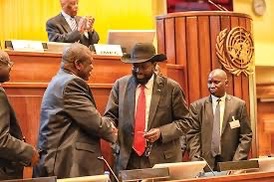
South Sudan, the world’s youngest nation, has faced profound challenges since its independence in 2011. The country’s journey toward peace and development has been marred by conflict, communal violence, and significant human rights concerns. While the criticisms against the government often dominate narratives, it is crucial to assess these issues with nuance, recognizing the complex realities of governance in a fragile post-conflict state and the constructive efforts being made.
Addressing Criticisms: Context and Accountability
Critics of the South Sudanese government often highlight human rights abuses, arbitrary arrests, and political instability. While these concerns are valid, they fail to consider the roles played by armed groups, political factions, and individuals whose actions undermine the government’s efforts to stabilize the nation. The National Salvation Front (NAS) and other splinter groups, for example, have consistently violated peace agreements, exacerbating insecurity in the Greater Equatoria region. Similarly, local-level communal violence, such as cattle raids and revenge killings, often originates from historical grievances and is beyond the government’s immediate control.
It is also worth noting that security forces tasked with maintaining order often operate under immense pressure in volatile regions. While some incidents of misconduct have occurred, labeling the entire system as corrupt or abusive unfairly discounts the efforts of many who work tirelessly to protect civilians. Blaming the government alone oversimplifies the issue and diverts attention from the broader societal and international factors contributing to these challenges.
Steps Taken by the Government
Despite the immense hurdles, the government has demonstrated a commitment to addressing these issues through various initiatives:
- Peace Efforts:The 2018 Revitalized Peace Agreement marked a significant step toward ending civil war. The government has worked to implement its provisions, including the integration of opposition forces into a unified national army.
- Human Rights Protections:The establishment of committees to investigate human rights abuses and prosecute offenders demonstrates a willingness to enforce accountability.
- Judicial Reforms:Efforts to enhance the judiciary’s independence and address arbitrary detentions are ongoing, although more progress is needed.
- Community Engagement:The government has promoted community dialogues to resolve local conflicts, often in collaboration with the United Nations Mission in South Sudan (UNMISS).
- Electoral Preparations:Postponing elections to 2026 was a difficult but necessary decision to ensure credible and fair processes. This demonstrates the government’s focus on long-term stability over expediency.
Role of the UN and Its Limitations
The United Nations, through its peacekeeping mission UNMISS, has played a pivotal role in South Sudan by providing security, promoting dialogue, and assisting with humanitarian aid. However, the UN’s performance has often fallen short of expectations:
- Limited Effectiveness in Peacekeeping:Despite a robust mandate, UNMISS has struggled to protect civilians effectively in many regions. Reports of attacks in UN-protected sites and insufficient responses to community-level violence highlight operational weaknesses.
- Failure to Enforce Accountability:The UN has repeatedly called for investigations into human rights abuses but has not significantly influenced accountability mechanisms within the country.
- Over-reliance on External Actors:By focusing on external interventions, the UN has often failed to empower local institutions and communities to take ownership of peacebuilding efforts.
Role of the International Community and Its Shortcomings
The broader international community has also played a critical role in South Sudan but has faced significant criticisms for its approach:
- Insufficient Support for Long-term Development:While emergency humanitarian aid has been provided, there has been a lack of investment in infrastructure, education, and economic development that would address root causes of conflict.
- Failure to Address Political Rivalries:The international community’s efforts to mediate political disputes have often been superficial, lacking the sustained engagement needed to resolve underlying tensions between key leaders.
- Imposing External Solutions:International actors have frequently prioritized their agendas over locally-driven solutions, leading to initiatives that are poorly adapted to South Sudan’s unique context.
Practical Solutions for the Government
To build on these efforts, the government must take additional steps:
- Enhance Accountability:Establish independent oversight bodies to investigate and address allegations of human rights violations, ensuring that offenders are held accountable.
- Strengthen Security Forces:Provide training and resources to security personnel to ensure they operate within the framework of human rights and the rule of law.
- Invest in Local Development:Addressing the root causes of communal violence requires investments in education, infrastructure, and economic opportunities for marginalized communities.
- National Dialogue:Expand efforts to include all stakeholders, including opposition groups and civil society, in discussions about the nation’s future.
Role of the International Community Moving Forward
To effectively support South Sudan, the international community should:
- Provide Technical Support:Offer expertise and funding for judicial and electoral reforms, ensuring these processes are transparent and effective.
- Facilitate Peace Talks: Mediate between the government and opposition groups to address unresolved grievances and promote reconciliation.
- Enhance Humanitarian Aid:Address the humanitarian crisis by supporting displaced populations and investing in long-term development projects.
- Promote Positive Engagement: Recognize and support the government’s constructive efforts, fostering collaboration rather than alienation.
Personal Perspective and Conclusion
Criticisms of the South Sudanese government, while not unwarranted, often fail to account for the complexities of governing a nation emerging from decades of conflict. The government has made notable strides in peacebuilding, accountability, and community engagement. However, achieving sustainable peace requires a collective effort involving citizens, the government, the United Nations, and the international community.
The UN and international community must reassess their approaches, focusing on empowering South Sudanese institutions rather than imposing external solutions. As a nation, South Sudan must prioritize unity and inclusivity, addressing grievances through dialogue and development rather than conflict. The government’s position—often criticized—deserves acknowledgment for its efforts in an extraordinarily challenging environment. With sustained commitment and international support, South Sudan can overcome its challenges and move toward a future defined by peace, stability, and prosperity.
 Vantage Points
Leave a comment